


Diwali Festival
Published On : October 28, 2018 | Author : Astrologer Pt Umesh Chandra Pant 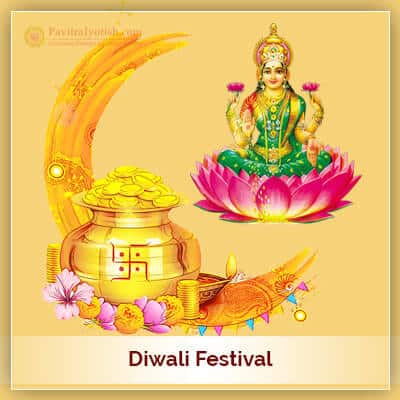
Useful and Sharable Details About Diwali Festival Significance
Importance of Diwali Festival Significance. India is a land replete with religious and devotional festivals, each marking fervency and joviality among countless enthusiasts. People hold reverence for time-honored festivals in their hearts and celebrate them in such splendor that the sheen and remembrance of fiestas never die down. Diwali is one such festival. It is known for its ever-increasing sanctity among countless enthusiasts across India and some parts of overseas lands as well. Diwali is one of the most revered and pious festivals deeply entrenched in Hindu culture. It is usually celebrated in October or November every year. This time, the revered festival of Diwali is to be held on October 20, 2025.
Book Diwali Lakshmi Puja now to invite wealth, peace, and prosperity into your home with divine blessings this festive season.
About Diwali Festival Significance
Diwali is known as the festival of lights in India. Traditionally, it is one of the most revered occasions celebrated by Hindu, Jain, Buddhist, and Sikh communities. They commemorate Diwali as the victory of light over darkness, which, in a literal sense, means that no matter how powerful an evil force is, it is fated to meet its end eventually. Today, the Indian festival of Diwali has become a worldwide phenomenon known as the festival of lights. It is hailed in a symbolic row of clay-prepared lamps called diyas, according to Skanda Purana. During the occasion, indoor and outdoor places are cleaned thoroughly. Diyas and colorful bulbs are lit around every corner of homes to greet Mata Lakshmi on Diwali.
Every festival of India bears a certain kind of mythological connection, and Diwali is also one of the fiestas bearing a religious and mythological link to Goddess Lakshmi and Lord Ganesha. Both deities signify fortune, knowledge, wisdom, prosperity, and spiritual enlightenment.
History of Diwali Festival
The festival of Diwali is a harbinger of the harvest season, a trend pioneered in ancient India. The religious books Skanda Purana and Padma Purana, written in Sanskrit texts, provide a detailed account of Diwali or Deepavali. Skanda Purana refers to the festival as the source of life-sustaining cosmic energy and light.
Another historical reference to Diwali is found in the Sanskrit play Nagananda by King Harsha, in which the festival is named Deepapratipadutsava. The translation of this name is “light of the first day festival.” It is said to have originated because newly wedded couples were offered lit lamps as gifts.
A well-known Sanskrit poet named Rajashekhara mentioned Diwali in his Kavyamimamsa. He called it a tradition in which people whitewashed their homes and adorned their surroundings, streets, and markets with oil lamps at night.
Al Biruni, a Persian traveler and historian, mentioned Diwali as the festival of Hindus held on the appearance of the New Moon in the Kartika month. History also says that Mughal emperor Akbar gave Diwali due honor and participated in the festival without discrimination. Sir William Jones, a noted philologist, also mentioned in his book The Lunar Year of the Hindus about Diwali, calling it a five-day festival held during the period of Aswina-Cartica.
Book 5 Days Diwali Lakshmi Puja for continuous blessings, wealth, and positivity throughout the festive season. Start your ritual today!
Diwali Festival Significance: Moral and Spiritual Reasons Why Diwali Is Celebrated
From the standpoint of ethics, the reason to celebrate Diwali points to the direction of its moral messages, such as the victory of light over darkness, the triumph of knowledge over ignorance, and the conquest of good over evil.
Diwali is celebrated with utmost religious adherence and ritual grandeur in conjunction with the traditions aligned with the festival. According to a popular tradition, the reason to celebrate Diwali is because this day marked Lord Rama’s victory over the demon Ravana, as mentioned in the epic Ramayana.
When Lord Rama was serving exile for 14 years in the forest with his younger brother Lakshmana and wife Sita, the tyrant king of Lanka, Ravana, driven by lust for power and arrogance, abducted Sita. This left Rama with no option but to retaliate to free his wife from Ravana’s clutches. This ultimately led to a fierce war between Rama and Ravana. The war finally concluded with Ravana being killed by Rama and Sita being freed from captivity. The victory of Lord Rama was celebrated with great pomp and show by the subjects of Ayodhya upon the return of Rama, Lakshmana, and Sita.
Birth of Goddess Lakshmi and Her Divine Role
Diwali is celebrated because the associated deity of the festival, Lakshmi, was born out of the churning of the cosmic ocean, a process called Samudra Manthan. The deity later wedded Lord Vishnu, which was commemorated with great splendor, leading to the festivity of Diwali.
According to the Vaishnavism tradition, Goddess Lakshmi is considered the Supreme Divine Being as the goddess of wealth and prosperity. She is the consort of Supreme Lord Vishnu. During Samudra Manthan, Lakshmi appeared in her first incarnation during the Amavasya of the Kartik month. Therefore, Diwali is celebrated as the birthday of Goddess Lakshmi, considering she came into being from the churning of the cosmic ocean.
Another reason for celebrating Diwali relates to the fifth incarnation of Lord Vishnu as Vamana, who appeared to rescue Lakshmi from the captivity of King Bali.
Celebrate Diwali with sacred Diwali Lakshmi Puja and open doors to success, abundance, and happiness. Book your ritual today!
Mythological Events and Historical Celebrations
The celebration of Diwali also has its mythological connection with the incident involving Lord Krishna when he killed Narakasura, the ruler of the kingdom of Pradyoshpur. The son of Bhoo Devi, Narakasura, was a tyrant king. The boon of Brahma made him omnipotent. Blinded by power and pride, he held captive 16,000 women. The intervention of Lord Krishna to put an end to Narakasura’s tyranny came into light when celestial beings pleaded with him to kill the despotic king. Krishna, with his wife Satyabhama, engaged in a fierce battle with Narakasura. The war concluded with Narakasura’s death at the hands of Satyabhama.
According to the Mahabharata, when the Pandavas (Yudhishthira, Bhima, Arjuna, Nakula, and Sahadeva) completed their 13-year exile, a result of banishment by the Kauravas after their defeat in the game of dice, their return was celebrated as Diwali by the subjects of Hastinapura.
Diwali is also celebrated to commemorate the coronation of the greatest king of Ujjain, Vikramaditya, whose reign is considered one of the best in Indian history. Moreover, Diwali marks the day when the founder of Jainism, Mahavir Tirthankar, attained Nirvana or omniscience at the age of 42 in the month of Aswina-Cartika.
Diwali – Festival of Lights and Its Significance
Diwali is the festival of lights. It is a symbolic festivity broadly acknowledged all across India and on the world stage. This is the day marking the inception of auspiciousness. It is believed to promote the doctrine of victory of light over darkness or the triumph of good over evil forces. Today, Diwali is a worldwide fiesta celebrated with great honor for deity Lakshmi and Lord Ganesha.
Panch Parva and Rituals
The Diwali Panch Parva Festival of Lights is also a harbinger of spotless cleaning, conspicuous when people clean their homes, utensils, and ensure sanitation of every nook and corner of the streets during the day. Experience prosperity and abundance of wealth with the five days of Diwali Lakshmi Puja.
On the second day, people are seen giving eye-catching decorative styles to their homes, including clay lamps and various design patterns called Rangoli, along with tiny colorful light bulbs. The worship of Goddess Lakshmi is held during the third day of Diwali, in which prayer is offered to Goddess Lakshmi and Lord Ganesha with sweets, flowers, chants of mantras, and Aarti.
Lakshmi Poojan and Prosperity
It is said that Lakshmi Poojan during Diwali brings forth infinite growth in the financial aspect of your life, meaning boundless prosperity and growth happen in the lives of devotees if Mata Lakshmi and Lord Ganesha are worshipped under proper rituals. Consult PavitraJyotish for Lakshmi and Ganesh Poojan on Diwali.
Diwali Festival Significance – Celebration and Family Bonding
The fourth day of Diwali involves friends and relatives visiting each other’s places with gifts and Diwali greetings. The Diwali Festival is wrapped up on the fifth day during which brothers pay visits to the homes of their married sisters and enjoy a lavish meal.
Experience five days of divine energy. Book 5 Days Diwali Lakshmi Puja to attract prosperity, happiness, and spiritual growth.
Celebration and Maa Lakshmi Puja
Diwali is mostly recognized with lights and the worship of Goddess Lakshmi and Lord Ganesha. In addition, the day is a harbinger of peace and prosperity for devotees, enabling them to bask in everlasting happiness. Diwali celebration involves the worship of Goddess Lakshmi, considered the Supreme Divine Being born out of the churning of the cosmic ocean. She was wedded to Lord Vishnu.
Also called Dhanlakshmi, Goddess Mata Lakshmi is offered prayers and greetings by devotees during the occasion of Diwali. In some parts of India, the idols of Mata Lakshmi are worshipped and immersed during the conclusion of the festival.
Diwali Festival Significance – Blessings of Maa Lakshmi
Regarded as the goddess of boundless fortune, Maa Lakshmi is believed to bless devotees with material and spiritual opulence. She removes their obstacles, enabling them to enjoy each and every moment of their lives with peace and luxury.
It is believed that Lakshmi Poojan during Diwali is auspicious, as the deity is invited to the homes of devotees to partake with valuable gifts and blessings of peace and prosperity. On the night of Diwali, Goddess Lakshmi roams the earth and feels invited to the home that is decorated with light bulbs and diyas placed at doorsteps, windowsills, and every corner of the residence. Apart from Goddess Lakshmi, prayers are offered to Lord Ganesha and Kubera. Mata Lakshmi is symbolized by wealth and prosperity, which is why the importance of Lakshmi Poojan during Diwali is higher.
Why Lakshmi and Ganesha Are Worshipped Together
There is a mythological tale as to why Lakshmi and Ganesha both are worshipped during Diwali. As the story goes, once Mata Lakshmi was preoccupied with vanity, believing she was the only divinity of wealth, and so she went on extolling herself in front of Lord Vishnu, her husband. At this, Bhagwan Narayan made Mata Lakshmi understand that a woman full of virtues is not considered complete until she bears progeny.
The implication was that since Lakshmi was without the virtue of motherhood, she was therefore not complete. This explanation by Lord Vishnu saddened Mata Lakshmi, and she sought help from Goddess Parvati, the consort of Lord Shiva. Mata Lakshmi pleaded with Mata Parvati to let her adopt one of her two sons so that she could be blessed with motherhood.
Reluctance soon engulfed Mata Parvati as she knew that Lakshmi Mata had the tendency of moving from one place to another too frequently, a reason that deeply concerned Parvati if she allowed Lakshmi to adopt one of her sons or not, because a child needs continuous care, while Lakshmi is never constant.
However, when Mata Lakshmi assured Mata Parvati that she would take good care of the child and bless him with all happiness, a convinced Parvati then agreed to let her adopt her son, Ganesha. Elated, Lakshmi blessed Ganesha to have happiness and prosperity. He was also granted the boon to be worshipped first during Diwali. Lord Ganesha is symbolized by knowledge and wisdom, while Goddess Lakshmi is symbolic of wealth and prosperity.
Invoke Goddess Lakshmi’s blessings this Diwali. Book Diwali Lakshmi Puja now and transform your life with prosperity and peace.
Experiencing Diwali Festival Significance in India
India is enkindled in the colorful vibrancy of diya lamps and colorful bulbs during Diwali. This explains why visiting the country during the occasion of Diwali is an experience that will remain imprinted in your memory lane, giving you a nostalgic experience of the festivity throughout your life. This is the occasion when India witnesses unity in diversity. The whole ambiance is dressed in twinkling and shining lights, marking Diwali as one of the most revered occasions. Elation blooms in the hearts of devotees by celebrating Deepavali with great pomp and show.
Diwali Festival Significance Across Indian States
In Goa, an age-old tradition of burning the effigy of demon Narakasura marks the triumph of good over evil forces. Meanwhile, the city of Mumbai dazzles with its unforgettable spectacle of fireworks, where the sky comes alive with pulsating sparks and glittering illumination. Odisha, on the other hand, celebrates Diwali with deep reverence, offering heartfelt tributes to one’s forefathers in a unique and spiritually significant manner. The festival is started by lighting jute sticks, and family members of devotees chant mantras in tribute to their forefathers, praying for their peace and salvation.
In Kumaon of India’s Uttarakhand state, the celebration of Deepawali is marked as devotees paint thresholds of their homes in red using the art called Aipan. This art involves Geru — a thickly-built pattern placed on the doorsill and painted with a rice solution into red patterns — a symbolic gesture to welcome the advent of Diwali and Mata Laxmi into the home. People also draw the footprints of the deity in beautiful patterns on Diwali.
Jaipur during Diwali reaches the height of its beauty with the Jaipur Shopping Festival, a celebration organized on Diwali in which traders partake to promote their trades in Rajasthan. Besides, cultural shows and performances are also organized in the city during the festival of Diwali.
Therefore, from Kolkata to Mumbai and all parts of India, experiencing the Diwali festival in the country is an experience that will never fade into oblivion from your memory lanes.
PavitraJyotish Diwali Offerings and Laxmi Puja Rituals
As a leading professional establishment for accurate and reliable solutions in astrology, PavitraJyotish offers a myriad of products and service solutions dedicated to the well-being of your life in every aspect, such as health, career, finance, marriage, business, love relationship, and other personal matters.
Our Diwali Laxmi Puja offers for devotees and our esteemed clients involve detailed puja according to the specific time of Muhurta. We carry out Laxmi Puja with rituals such as Laxmi Strotam Path, Homam conducted under Pradoshkal Muhurta Timing, Nisheeth Kaal Muhurta Timing, and Mahanisheeth Kaala Muhurta Timing as deemed appropriate.
Laxmi Puja on Diwali with rituals will be conducted by four learned pandits under the guidance of Pt. Umesh Chandra Pant Ji.
Top Reasons to Book Diwali Lakshmi Puja from PavitraJyotish
• A team of learned and experienced professional pandits.
• Puja conducted with rituals and ingredients as recommended in Vedic Shastra.
• Proper assistance for your questions regarding Lakshmi Puja.
• Cost-free energized and activated gifts home-delivered to your address.
Auspicious Occasion of Wealth, Peace, and Prosperity
Diwali is famed for being one of the most auspicious festival seasons, marking the beginning of the seasonal harvest, peace, and prosperity. Countless devotees from across India and the world pay their tribute to Goddess Lakshmi and Lord Ganesha during Diwali, seeking blessings of eternal prosperity and peaceful living from the deities. The Diwali festival significance lies in its power to unite people in devotion, gratitude, and celebration.
Diwali Festival Significance: Rituals, Traditions, and Devotional Practices
Several mythological and cultural references lay the background of Diwali as an important devotional festival, celebrated with utmost adherence to rituals. Spotless cleaning of homes and surroundings is undertaken during Diwali, and people decorate their homes with colorful light bulbs and diya lamps. It is believed that on Diwali, Mata Lakshmi roams the earth and is pleased to enter a home that is decorated with diya lamps and is well-cleaned. This reflects the Diwali festival significance as a celebration of purity, devotion, and preparation for divine blessings.
Worshipping Goddess Lakshmi and Lord Ganesha
Symbolic of wealth and prosperity, Goddess Lakshmi is worshipped during Diwali, and devotees offer prayers to her for blessings of wealth and happiness. Lord Ganesha is also worshipped on Diwali to bless devotees with knowledge, wisdom, and prosperity. Book your Diwali Mahalakshmi Puja through our Puja and Anushthan Services performed by reliable and learned pandits. The Diwali festival significance continues to inspire millions to seek divine grace for abundance, knowledge, and spiritual upliftment.
Invite Goddess Lakshmi’s blessings for five sacred days. Book 5 Days Diwali Lakshmi Puja and transform your life with abundance.
FAQs – Diwali Festival Significance
Question: Why is Diwali considered the festival of lights?
Answer: Diwali symbolizes the victory of light over darkness, good over evil, and knowledge over ignorance. Homes and streets are illuminated with diyas and lights to welcome Goddess Lakshmi and celebrate positivity.
Question: What is the mythological significance of Diwali?
Answer: Diwali commemorates Lord Rama’s victory over Ravana, Goddess Lakshmi’s birth from Samudra Manthan, Lord Krishna’s slaying of Narakasura, and the Pandavas’ return from exile, among other sacred events.
Question: Why are Goddess Lakshmi and Lord Ganesha worshipped together on Diwali?
Answer: Goddess Lakshmi symbolizes wealth and prosperity, while Lord Ganesha represents wisdom and knowledge. Worshipping them together brings both material and intellectual blessings into one’s life.
Question: What rituals are performed during Diwali celebrations?
Answer: Rituals include cleaning homes, lighting diyas, drawing rangoli, performing Lakshmi-Ganesha Puja, chanting mantras, offering sweets and flowers, and celebrating with family gatherings and gifts.
Question: How is Diwali celebrated across different regions of India?
Answer: Traditions vary—Goa burns Narakasura effigies, Odisha honors ancestors, Uttarakhand decorates thresholds with Aipan art, and Jaipur hosts grand shopping festivals—each reflecting Diwali’s cultural diversity.
Read more Articles: Celebrate Diwali Panch Parva the Glorious Festival of Prosperity and Diwali Laxmi Puja Method (Vidhi)