


Navratri Festival Means Nav Durga Pujan From 22 September 2025 to 1 October 2025
Published On : March 1, 2018 | Author : Astrologer Pt Umesh Chandra Pant 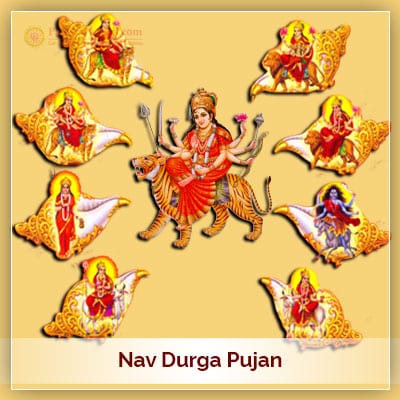
Know Navratri Festival And Its Significant Details
Durga Pooja – The Source of Invincible Energy. The Navratri Festival is a vibrant celebration deeply connected to the themes of strength and devotion, especially during Durga Pooja.
Ashwin Navratri From 22 September 2025 to 1 October 2025
Land of India is not just limited to a great and sacred culture but it is also a holy land of gods where many incarnations of the divine have manifested. Goddess Durga Divine Power is an eternal presence in this tradition. There are many Puranic stories related to these incarnations. The whole universe, including the sun, stars, planets, constellations, and five elements, is governed mysteriously by the Supreme Being. It is an eternal truth that nothing is possible without the supreme energy (para-brahma).
Even though many people in today’s technology era are trying to force their views on others about the non-existence of gods and deities, the truth is they certainly realize the divine power in one way or another. Hinduism is also known as “Sanatana Dharma,” which means eternal religion since time immemorial. There is a lot of knowledge about the whole universe, its origin, and expansion. Our Vedas and Puranas are witnesses to the fact that whenever there is harm to religion and empowerment of demonic forces like misconduct and crime, god incarnates in various forms to free the world from demonic powers and save the people of truth and devotion. These incarnations re-establish dharma. Book Nav Durga Pujan in Navratri Festival from our website to seek blessings of Goddess Durga Divine Power.
Birth of Goddess Durga Divine Power
Similarly, when the entire earth and heavens were the victims of demons like Mahishasura, all the gods gathered, and with the inspiration of God Almighty, they projected their energy into a single form and granted it various weapons and superpowers, making it invincible and auspicious. Goddess Durga Divine Power emerged as the savior. She is known by the name Adi Shakti, Maa Jagadamba, Durga, or Amba in the whole world. Mother Durga is not only the protector of this world but also the giver of boons.
The divine tales of Shiva and Shakti are narrated in a captivating manner in the Devi Bhagvata and other Puranas like Surya, Shiva, Srimad Bhagvatam, etc. Without the power of Shakti, not a particle of the universe can move. Even the supreme witness Shiva (devoid of vowel “ee”) is like a corpse without the Shakti. Goddess Shakti incarnated on nine days in different forms like Jayanti, Mangala, Kali, Bhadrakaali, Kapalini, Durga, Kshama, Shivaa, Dhaatri, Swaaha, Swadha, etc., and slayed the great demons like Shumbh-Nishumbh, Mahishasura, Raktabeeja, etc. She helped the people of this world by removing their misery and helped in re-establishing dharma.
Worship and Blessings of Goddess Durga In Navratri Festival
Our ancient seers, who were the well-wishers for the entire humanity, provided us with the appropriate methods of worshiping the goddess. Sage Medha advised King Suratha to worship and take refuge in Goddess Durga Divine Power, who is the giver of prosperity, heavens, and liberation.
By following this advice, the King achieved a never-ending kingdom and fame. Since the time when Goddess Durga took form from the energies of various devatas, several people have devoted their lives and received great boons and grace from the goddess.
What to talk of humans when even the celestial deities themselves are engaged in the worship of Shakti. Even Lord Rama himself worshiped Goddess Durga during Navratri Festival to achieve victory over Ravana. In the whole of India, the energy of the goddess is celebrated during Ashwin Shukla Pratipada and Vasanta Shukla Pratipada every year in a grand manner. These are also known as Vasanta and Shaaradiya Navaratri. Apart from these, there are two other lesser-known Navaratris celebrated by fewer people. These are four major Navratri festivals for Goddess Durga Divine Power.
Navaratri: Celebrating Goddess Durga Divine Power
The beginning of the Vasanta (spring) season is a celebration for the agriculture-dominated nation of India, where Goddess Durga Divine Power is honored. During these days, the crop of wheat is sown, and on the other hand, the crops of paddy give hints of harvesting, which brings an elated feeling to the farmers and the whole country. On this auspicious occasion, the entire country worships Goddess Durga with Vedic methods for nine days. This is the reason why it is called “Navaratri.” As a result of the worship of Goddess Durga, people get rid of sorrow, obstacles, poverty, and diseases and obtain the desired results as blessings.

Beginning of Navaratri and Kalashasthapana
Like every year, the beginning of Navaratra and Kalashasthapana is on Vikrami Samvat 2082, Monday (22 September 2025). Goddess Durga Divine Power is invoked during this sacred time. “Durga Saptashati” is the most authentic and most popular scripture for the puja of the divine goddess. The glory of the Goddess Durga Divine Power is sung in this scripture in a total of 700 verses. Just by the faithful recitation of Durga Saptashati, people can get the grace of Mother Durga instantly.
For those who are not capable of chanting the elaborate 700 verses or for those who do not have time to do an elaborate recitation, a short recitation of “Saptashaloki Durga” is also good enough to get the desired fulfilled. In this article, you can know about the nine divine forms of the Goddess Durga Divine Power and its brief introduction and puja, articles for puja, havan, making of havan kunda, material for the havan, and concise information on many aspects related to the goddess and this Navratri festival. By following these methods, you can perform authentic puja to the Goddess Durga Divine Power as per the Agama and Vedas. The sequence of Navaratri this year is as follows:
First Navratra and Goddess Durga Divine Power
First Navratra, Vikram Samvat 2082, Vasant Ritu, Ashwin month, 22 September 2025, Tithi: Shukla Paksha Pratipada, Day: Monday. The muhurta for Kalasha Sthapana and Pooja is from 06:09 AM to 08:05 AM (Total Shubh Muhurta Time: 1 Hour 56 Minutes) and also during the Abhijeet Muhurta in the afternoon from 11:48 AM to 12:37 PM. The goddess of the first day is Goddess Shailaputri (As per Pratipada Tithi).
Second Day of Navratri Festival – Goddess Durga Divine Power
Second Navratra, 23 September 2025, Tithi: Shukla Paksha Dwitiya, Day: Tuesday. The goddess of the second day is Goddess Brahmacharini (as per Dwitiya Tithi).
Devotees worship Goddess Durga Divine Power in the form of Goddess Brahmacharini on this day, seeking strength, peace, and spiritual growth.
Third Day of Navratri – Goddess Durga Divine Power
Third Navratra, 24 and 25 September 2025, Tithi: Shukla Paksha Tritiya, Day: Wednesday and Thursday. The goddess of the third day is Goddess Chandraghanta (As per Tritiya Tithi).
Fourth Day of Navratri Festival and Goddess Durga Divine Power
Fourth Navratra, 26 September 2025, Tithi: Shukla Paksha Chaturthi, Day: Friday, the goddess of the fourth day is Goddess Kushmanda (As per Chaturthi Tithi). She represents the Goddess Durga Divine Power, blessing devotees with strength and spiritual energy.
Fifth Day of Navratri – Goddess Durga Divine Power
Fifth Navratra, 27 September 2025, Tithi: Shukla Paksha Panchami, Day: Saturday. The goddess of the Fifth day is Goddess Skandamata (As per Panchami Tithi).
Sixth Day of Navratri – Goddess Durga Divine Power
Sixth Navratra, 28 September 2025, Tithi: Shukla Paksha Shashthi, Day: Sunday. The goddess of the sixth day is Goddess Kaatyayani (as per Shashthi Tithi), representing the essence of Goddess Durga Divine Power.
Seventh Day of Navratri Festival – Goddess Durga Divine Power
Seventh Navratra, 29 September 2025, Tithi: Shukla Paksha Saptami, Day: Monday. The goddess of the seventh day is Goddess Kaalaratri (as per Saptami Tithi). Devotees worship her as a manifestation of Goddess Durga Divine Power, symbolizing courage, protection, and the destruction of negativity.
Eighth Day of Navratri and Goddess Durga Divine Power
Eighth Navratra, 30 September 2025, Tithi: Shukla Paksha Ashtami, Day: Tuesday. The goddess of the eighth day is Goddess Mahagauri (as per Ashtami Tithi). Devotees believe that Goddess Durga Divine Power manifests strongly on this day, blessing her followers with peace, prosperity, and the removal of past sins. Worship of Goddess Mahagauri is considered highly auspicious during the Ashtami of Navratri.
Ninth Day of Navratri – Goddess Durga Divine Power
Ninth Navratra is on 1 October 2025, Tithi: Shukla Paksha Saptami, Day: Wednesday. The goddess of the ninth day is Goddess Siddhidaati (as per Navami Tithi).
The Importance of Kanya Poojan in Navratri Festival
From the first day of Navratri to the ninth day, one should worship the goddess and related deities with the Shodasha Upachara method with faith and devotion. Goddess Durga Divine Power is invoked during these sacred rituals.
Distribute the Prasad after the puja is over and worship nine girls by considering them the divine image of the goddess herself. Along with that, serve them with delicacies, sweets, and savories. Also, worship one male child along with them. Gift them with beautiful garments, stationery, and money, etc. If you are observing a vrata, it should be continued until the ninth day. These rituals reflect the deep reverence for Goddess Durga Divine Power.
Nine divine forms of Goddess Jagadamba
प्रथमं शैलपुत्री च द्वितीयं ब्रह्मचारिणी। तृतीयं चन्द्रघण्टेति कूष्माण्डेति चतुर्थकम्।।
पंचमं स्कन्दमातेति षष्ठं कात्यायनीति च। सप्तमं कालरात्रि महागौरीति चाष्टमम्।।
नवमं सिद्धिदात्री च नवदुर्गाः प्रकीर्तिताः। उक्तान्येतानि नामानि ब्रह्मणैव महात्मना।।
prathamam Shailaputree cha dviteeyam brahmachaarinee |
truteeyam chandraghanteti kooshmaandeti chaturthakam ||
panchamam skandamaateti Shashtham kaatyaayaneeti cha |
saptamam kaalaraatreeti mahaagaureeti chaashtamam ||
navamam siddhidaatree cha navadurgaah prakeertitaah |
uktaanyetaani naamaani brahmanaiva mahaatmanaa ||
Goddess Durga Divine Power and the Nine Forms
Maa Shaila-Putri – First Form of Goddess Durga Divine Power
The first form of Goddess Durga Divine Power, mother Jagadamba, is known as Shaila-Putri, who incarnated in the family of King Himalaya and hence she is known by the name “Shailaputri.” The vehicle of the goddess is a white bull. She holds a trishula in the right and a lotus in the left hand respectively. Stories related to this goddess are very interesting; they are generally found in Devi Bhagavata and other texts.
Maa Brahmacharini – Second Form of Goddess Durga Divine Power
The second form of Goddess Durga Divine Power, mother Jagadamba, is known as Brahmacharini. She performed divine penance and destroyed many groups of demons with her powers. She always blesses her devotees with abundance. She is the embodiment of graciousness and compassion. She holds a rosary in the right hand and a kamandalu in the left hand.
Maa Chandraghanta – Third Form of Goddess Durga Divine Power
The third form of Goddess Durga Divine Power, mother Jagadamba, is known as Chandraghanta. She blesses the devotees with fearlessness and is very kind to the sadhakas. She upholds religion by destroying the asuras and rakshasas. On her forehead, there is a mark of the crescent moon which is like a gong; hence, she is known as “Chandra-ghanta” throughout the world. She has ten arms and holds various weapons in her hands and rides a lion. Even great demons fear the terrifying sounds of the ghanta (giant gong).
Maa Kooshmaanda – Fourth Form of Goddess Durga Divine Power
The fourth form of Goddess Durga in Navratri Festival, mother Jagadamba, is known as Kooshmaanda. She has eight arms and holds a kamandalu, bow, arrow, lotus, flower, nectar (in a pitcher), chakra, and gadaa in her hands for the welfare of the beings. She rides a lion. She saves the devotees from enemies, diseases, sorrow, and fear with her grace.
Maa Skanda-Mata – Fifth Form of Goddess Durga Divine Power
The fifth form of Goddess Durga Divine Power, mother Jagadamba, is known as Skanda-Mata. She is the mother of Lord Skanda himself. She is holding the child Skanda on her lap. She also holds a lotus flower and makes the boon gesture, blessing her devotees with prosperity and fulfillment of their desires.
Maa Katyayani – Sixth Form of Goddess Durga Divine Power
The sixth form of mother Jagadamba is popularly known as Katyayani. She is the slayer of the demon Mahishasura. She emerged from the divine light of Tridevas (Brahma, Vishnu, Mahesh). Ever effulgent, the worship of the Goddess Durga Divine Power was first done by sage Katyayana. Hence, she is known by the name of her great devotee as “Katyayani.” She has four arms, holding the gesture of fearlessness, the gesture of blessing, a sword, and lotus flowers in her hands. The lion is her vehicle, and she bestows her devotees with materialistic gains, wealth, spirituality, and moksha.
Maa Kaalratri – Seventh Form of Goddess Durga Divine Power
The seventh form of mother Jagadamba is popularly known as Kaalratri. For the welfare of human beings, she emerged in the terrifying form of Kalaratri. The divine Goddess Durga (Navratri Festival) Divine Power has three eyes and four arms. Her appearance is very intense and ferocious. She is very dark in complexion and exhales intense flames of fire from her nostrils. She rides a mule. Her worship is believed to dispel all sorrows and obstacles. She blesses her children with peace and harmony.
Maa Mahagauri – Eighth Form of Goddess Durga Divine Power
The eighth form of mother Jagadamba is popularly known as Mahagauri. She has a very fair complexion like that of a white flower or the moon. Because of this reason, she is called “Mahagauri.” She has four arms, and her vehicle is a bull. She holds the gesture of fearlessness, the gesture of blessing, a trishula, and a damaru in her four hands, respectively. She attained Lord Shiva himself as her better half with her great and intense penance. With the worship of the Goddess Durga Divine Power, the devotees instantly attract prosperity, and their desires get fulfilled.
Maa Siddhidatri – Ninth Form of Goddess Durga Divine Power
The ninth form of mother Jagadamba is well known as Siddhidatri. Moreover, she is the giver of all siddhis (divine powers). In addition, she is seated on the lotus altar, and her vehicle is a lion. Furthermore, she holds a chakra, gadaa, conch, and a lotus in her hands. Therefore, she grants success to her devotees in all areas of life. Above all, the Goddess Durga Divine Power dispels ignorance and removes obstacles from the lives of her devotees, thus bringing prosperity and fulfillment of their desires.
The Benefits and Significance of Authentic Durga Path In Navratri Festival
The benefits and significance of authentic Durga path – Goddess Durga Divine Power: Those who perform the complete rituals of Durga pooja as per the Vedic methods by a learned priest every year dispels darkness from their life and from their house. They get rid of ignorance, poverty, and poisons like (opium, datura, snake venom, scorpion venom, etc.).
One is freed from the negative effects of mantra-yantra (done by others), kuladevi-devata dosha. They also get rid of doshas related to dakini, shakini, planets, spirits, ghosts, demons, higher demons, thieves, robbers, fire accidents, and from the enemies. If there are any problems with the spouse or progeny, they also get cured. All the obstacles and negativities are removed. Prosperity prevails in livelihood and one gets rid of all the obstacles related to the children’s marriage. All the diseases are cured and one gets all the desires fulfilled with the grace of the goddess. Truly, Goddess Durga Divine Power brings divine protection and blessings.
A Brief and Simple Method for Navaratri Pooja In Navratri Festival
In the worship of Goddess Durga in Navratri Festival, prime importance is given to purity, chastity, and celibacy. For the puja, one should not do the Kalashasthapana during rahu kaal or in the yamaghanta kaala. One should decorate the house or puja section with fragrant flowers and a variety of leaves for all the nine days. One should establish sarvathobhadra, swastika, navagraha mandalas as per the procedure of the shastras. All the deities of the established idols and mandalas should be invoked with the respective mantras and venerated with Shodashaupachara poojan. With full devotion, the blessings of Goddess Durga Divine Power are received by the devotees.
There is also a tradition of keeping the lamp burning for all the nine days hence devotees should prepare for the same accordingly. Deepak is the witness of our poojas and hence is the symbol of god almighty. One should use desi cow ghee for the akhanda deepa. There is a custom of placing the uninterrupted lamp on the agni kona of the Sarvatobhadra mandala.
Procedure for the Vrata (Fasting)
Every year, devotees observe austerities during the Navratri Festival. There are traditions of observing the vrata on the first day, last day, or for the whole nine days. It is best to use pure and vegetarian products during the vrata. People observing vrata should never consume tamasika items like onions, garlic, non-vegetarian food, etc.
When the vrata is completed on the last day, there is a custom of worshiping nine small girls, who are considered as goddesses themselves. Hence, one should serve them with food and gifts as per the capacity and bow down to them with faith and devotion. This tradition highlights the Goddess Durga Divine Power worshipped in every devotee’s heart.
Eatables During the Navaratri Vrata
Potatoes, flour or water caltrop, desi ghee, fruits like mango, bananas, oranges, apples, grapes, and dry fruits like cashews, almonds, raisins, etc. should be consumed. Apart from these, do not consume items like besan laddu and dishes made from grains during the vrata period. Following these practices not only maintains purity but also connects devotees to the Goddess Durga Divine Power, making their Navratri Festival observance spiritually fulfilling.
Do Not Do These Things During Navratri Festival
It is strongly advised to abstain from consuming products like carbonated drinks, artificially flavored chocolate, garlic, onions, excess salt, meat, spices, chili, liquor, cigarettes, tobacco, and all other tamasika items. These are to be avoided because consuming them could break your vrata. Apart from these, one should try not to indulge in anger, stress, laziness, etc. during the vrata. Try to avoid using strongly scented soaps, shaving, and haircuts during this sacred period of Goddess Durga Divine Power.
The Importance of Colors in Navratri and Goddess Durga Divine Power
Colors can have a profound effect on our minds and energy levels. Hence, devotees should try to use specific colored garments on various days of the navratri festival. For instance, it is believed that white or red clothes are auspicious on the first day. On the second day, peach, light yellow, saffron, etc., are considered favorable. On the third day, red is used, and on the fourth day, white and blue are preferred. On the fifth day, red and white are better, and on the sixth day, green, red, and white are to be used.
Seventh day corresponds to red and blue, while the eighth day includes red, yellow, pink, and white shades respectively. On the final day, white and red colors are recommended and considered auspicious during the vrata period of Goddess Durga Divine Power.
A Brief Description of Puja Articles (Samagri) and Goddess Durga Divine Power
Goddess Durga Divine Power is invoked through sacred rituals that require specific puja articles (samagri).
Roli 250 gm, Mauli -11, pure desi cow ghee, panchmeva (five types of dry fruits), panchapatra, kalasha (made of gold, silver, copper, or clay, which should not have any defects). A lamp which burns constantly, sacred thread, betel nut, betel leaves, clove, cardamom, green coconut, dry coconut, rice, dried coconut fruit, desi sugar, incense, agarbatti, saffron. Make-up items, saree, milk, yogurt, honey, colors (red, yellow, green, etc.), 5 types of gems, five types of leaves, red flowers, ashtagandha, camphor, barley, black sesame, cotton, sweets, 5-meter red and white clothes. Five types of fruits, five clothes for the Brahmins along with vessels of gold, silver, copper, etc. The soil of a river for sowing the Bayley. An Aasana for sitting (which should not have cloth) and should be made of wool, or deerskin, etc.
Ritual Preparations and Goddess Durga Divine Power
Note: The materials for the fire ritual (havan) should be collected about two days in advance to honor the Goddess Durga Divine Power.
Prohibition: Tulasi leaves should not be offered to Lord Ganesha, and Durva grass should not be used during Durga Puja dedicated to Goddess Durga Divine Power.
The Beginning of the Pooja
In the morning, after retiring from the household chores, wear clean clothes for the pooja and take the above-mentioned pooja materials. Keep the Durga Saptashati book on the altar and sit on a clean aasan facing the east or north direction. Apply sandalwood paste to the forehead. Perform achamana and pavitrikarana by chanting the respective mantras. Then take some water in the right hand and perform the Sankalpa for the pooja, seeking the blessings of Goddess Durga Divine Power.
For fulfilling every desire:
dehi saubhaagyamaarogyam dehi me paramam sukham| rupam dehi jayam dehi yasho dehi dvisho jahi||
If your marriage is getting delayed then chant this mantra along with the pooja:
patnim manoramaam dehi manovrittanusaarinim| taarinim durgasansarasaagarasya kulodbhavaam|
To get rid of various diseases:
roganasheshanapahansi tushta rushta tu kaamaan sakalanabhishtan| tvaamashritaanaam na vipannaraanam tvamashrita hyashrayatam prayanti||
Procedure for Shodashopachara Poojan:
Sip small quantity of water three times with the following mantras,
Om keshavaaya namah, Om narayanaya namah, Om madhavaaya namah, and wash the hands with the mantra Om hrishikeshaaya namah.
Mantra for aasana:
Om prithvi tvaya dhrita loka devi tvam vishnuna dhrita| tvam cha dhaaraya mam devi pavitram kuru chaasanam||
Mantra for purification:
Om apavitrah pavitro vaa sarvaavasthaangato’pi vaa| Yah Smaret-Pundarikaakssam Sa Baahya-Abhyantarah Shucih ||
Mantra for applying sandalwood paste:
Om aadityaa vasavo rudra vishvedevaa marudganaah| tilakam te prayachchhantu dharmakamartha siddhaye||
Thread for protection: (to be tied on left hand of women and right hand of men)
Om yenabaddhobali raja daanavendro mahaabalah| tenatvaamanubadhnami rakshe maachala maachala | |
Mantra for kindling the lamp:
Om jyotistvam devi lokaanaam tamaso haarini tvayaa| panthaah buddhishcha dyotetam mamaitau tamasavritau||
Procedure for Sankalpa:
Om vishnurvishnurvishnuh, Om namah paramatmane, shripurana-purushottamasya shrivishnorajnaya pravartamanasyadya shribrahmano dvitiyaparadrdhe shri shvetavarahakalpe vaivasvatamanvantare- ashtavinshatitame kaliyuge prathamacharane jambudvipe bharatavarshe ………………..shruti smriti puranokta-phalapraptikamah amukagotrotpannah amukasharma aham mamatmanah saputrastribandhavasya shrinavadurganugrahato………………..
The above mantra is chanted in a correct way and one should take the Sankalpa as per the scriptural method.
After the Sankalpa, one must first worship Lord Ganesha by meditating on him, invoking him and performing pooja to him.
Shree Ganesha Mantra:
Om vakratunda mahakaya suryakoti samaprabha| nirvighnam kuru me deva sarvakaryeshu sarvada||
Provisions for Kalasha Sthapana and Goddess Durga Divine Power
Goddess Durga Divine Power is invoked through the sacred ritual of Kalasha Sthapana. For the pooja, one should use the kalasha made of gold, silver, copper, etc. If one is incapable, then an earthen pot can also be used. These clay pots should be well-made and should be red in color. They should not have any cracks or defects. It should be washed with clean water first and then filled with Gangajal or pure water.
On the pooja altar, spread some soil and sow wheat or barley. Then place the kalasha (pitcher) above it along with the chanting of related mantras. The kalasha should be adorned with perfume, silken cloth, and five leaves. Then add flowers, turmeric, herbs, and uncooked rice in the water of kalasha. Above the kalasha, place a small pot filled with rice and it should be closed with a coconut. Mentally invoke all the sacred waters of rivers into this kalasha as a symbol of Goddess Durga Divine Power.
Muhurta for Kalasha Sthapana
Goddess Durga is especially worshipped during the auspicious Muhurta In Navratri Festival. On 22 September 2025, Vikrami Samvat, Monday, Ashwin Shukla Paksha Pratipada is the day for the Kalasha Sthapana. The time during which the Sthapana should be done is after 06:09 AM. It should be done between 11:48 AM to 12:57 PM, which is considered the auspicious Abhijeet Muhurta. Performing the ritual during this time enhances spiritual strength and helps devotees receive the divine blessings of Goddess Durga Divine Power.
Invocation Mantra: (for Kalasha)
Om kalashasya mukhe vishnuh kanthe rudrah samashritah| muletvasya sthito brahma madhye matriganah snritah||
gange cha yamune chaiva godavari sarasvati | narmade sindhu kaverijale’smin sannidhim kuru ||
Shodasha Upachara Poojan Vidhi (procedure):
(1) Asana (Flowers etc.):
Om anekaratna-sanyuktam nanamanisamanvitam| katrtasvaramayam divyamasanam pratigrihyatam||
(2) Padyam (Water for washing feet):
Om tirthodakam nirmala’cha sarvasaugandhyasanyutam| paada-prakshalanarthaya dattam te pratigrihyatam||
(3) Aghrya (water mixed with flowers and fragrance):
Om gandha-pushpaakshatairyuktam adhryansammapaaditam maya| grihnaatvetatprasadena anugrihnatunirbharam||
(4) Achamana (scented drinking water):
Om karpurena sugandhena vasitam svaadu shitalam| toyamachamanayedam piyusha sadrisham piba||
(5) Snanam (water mixed with sandalwood):
Om mandaakinyaah samaanitaih karpuraagaruvaasitaih| payobhirnirmalairebhih divyahkaayo hi shodhyatam||
(6) Vastra (garments):
Om sarvaabhushadhike saunye lokalajjaanivaarane| mayaa sampadite tubhyam grihyetam vaasasi shubhe||
(7) Abhushana (ornaments):
Om alankaaraan mahaadivyan naanaaratnairvinirmitan| dharayaitaan svakiye’smin sharire divyatejasi||
(8) Gandha (fragrance):
Om shrikaram chandanam divyam gandhaadhyam sumanoharam| vapushe suphalam hyetat shitalam pratigrihyataam||
(9) Pushpa (flowers):
Om malyaadini sugandhini malatyadini bhakttitah| maya’hritani pushpaani padayorarpitani te||
(10) Dhupa (incense):
Om vanaspatirasodbhutah sugandhih ghranatarpanah| sarvairdevaih shlaghito’yam sudhupah pratigrihyataam||
(11) Deepa (desi ghee lamp):
Om sajyah suvartisanyukto vahnina dyotito mayaa| grihyatam dipakohyesha trailokya-timirapahah||
(12) Naivedya (eatables):
Om sharkaraa khandakhadyani dadhi-kshira ghritani cha| rasanaa karshanaanyetat naivedyam pratigrihyataam||
(13) Achamana (water):
Om gangajalam samanitam suvarnakalashasthitam| susvaadu pavanam hyetadachama mukha-shuddhaye||
(14) Dakshina and Tamboola (betel leaf and money):
Om lavangailadi-sanyuktam taambulam dakshinam tatha| patra-pushpasvarupam hi grihananugrihana maam|
(15) Arati (with lamp):
Om chandradityau cha dharani vidyudagnistathaiva cha| tvameva sarva-jyotinshi artikyam pratigrihyatam||
(16) Parikrama:
Om yaani kaani cha paapaani janmantara-kritani cha| pradakshinayah nashyantu sarvaniha pade pade||
One should do circumambulation around the idol or photo of the goddess. If it is not possible then one must stand in the same place and turn towards the right.
Kshama Prarthana (Prayer for forgiveness):
Om avahanam na janami na janami visarjanam| pujam chaiva na janami bhakta esha hi kshanyatam|| anyatha sharanam nasti tvameva sharanam mama| tasmatkarunyabhavena bhakto’yamarhati kshamam|| mantrahinam kriyahinam bhaktihinam tathaiva cha| yatpujitam maya hyatra paripurna tadastu me||
Om sarve bhavantu sukhinah sarve santu niramayah| sarve bhadrani pashyantu ma kashchidduhkha-bhagbhavet ||
(May all get happiness, may all become healthier, prosperous. May they see positivity everywhere, May no one suffer from pain and sorrow)
List of items for Homam In Navratri Festival:
Guggul, Tinospora, barley, sesame seeds (black), jatamansi (nard), sugar, havan samagri, sea salt, chaayapatra, purnapatra, clothes for the priest, woods for nine planets, rice, desi ghee, palash flowers, bael fruit, pomegranate seeds, sandalwood powder, lotus flower, black pepper, almonds, five types of dry fruits, lotus seeds, blue stone, pearl, coral, silver coin, spinach, sugarcane, kheer (pudding), halwa (sweet), desi sugar, butter, bhoj patra, durva grass, agaru, tagaru, shatavari herbs, camphor, etc.
These sacred offerings represent the Goddess Durga Divine Power and are essential for ensuring successful completion of the homam.
Making of Homa Kundam (altar of fire):
In Navratri Festival, different types of havan kundas are used for various types of rituals and anushthanas. For installing the idols of gods and goddesses, shanti karma, pushti karma, for rains, for planetary rituals, and for Vedic rituals, the number of kundas used are one, three, five, seven or more. The fire altar could be in shapes like spherical, square, lotus-shaped, half-circle, crescent moon-shaped, yoni-shaped, pentagon, seven-angled, eight-angled, nine-angled, etc. Usually, a square-shaped kunda is preferred for the havan which has trimekhala, and a yoni-shaped structure inside.
The shape of the yoni resembles a leaf. Its height should be about one finger and width about eight fingers. They should be made by digging the ground, or if already made, they should be cleaned and decorated well in advance. Those kundas with cracks, broken angles, or insects should never be used for religious ceremonies. Instead of merits, the performer of havan incurs sin. The fruits of homas done in such kunda go to the demons.
Thus, the proper preparation of the altar is considered an invocation of Goddess Durga Divine Power, ensuring purity and sanctity of the ritual.
Samidha and Its Ritual Importance with Goddess Durga Divine Power
Samidha is the wood which is used for the sacred fire rituals. Before using them for rituals, they must be completely dried in the sun and should be free from insects. Else these wood pieces should not be used for the pooja.
Complete the pooja with the procedure given in the scriptures. After the pooja is over, distribute the prasada and also take some of the prasad.
Performing Pooja and Attaining Goddess Durga Divine Power
By performing pooja of the beloved goddess with the above-mentioned procedure, one gets immense grace of the divine mother. As per the famous saying “Kalau Chandi Vinayakah”, in the present age of Kali, the worship of Goddess Durga Divine Power and Lord Ganesha is extremely auspicious and effective. Hence, you should also do this pooja with faith and devotion to get blessings from the goddess.
Like the previous years, there will be special pooja conducted by the team of priests of Pavitra Jyotish Kendra especially for you. For getting the blessings of Goddess Durga Divine Power in a definitive way, you can also be a part of this pooja. Register today for the special pooja during this Navratri Festival. After the pooja, you will receive the special prasadam along with two free gifts (empowered Maa Durga Bisa Yantra and Siddha Durga Beesa Yantra Pendant) on your postal address via courier. Parts of homas done in such kunda go to the demons.
PavitraJyotish Kendra wishes you and your family a very happy Navaratri. May divine mother Durga fulfill all your desires and bless you always.
Jay Maa Durga.
Special Information for You – Goddess Durga Divine Power
Through Pavitra Jyotish Kendra, you can also know about detailed information on your personalised horoscope and a precise, certain solution for your problems. Goddess Durga Divine Power guides devotees through challenges and provides strength for overcoming obstacles.
Guidance and Reliability with Goddess Durga Divine Power
Pavitrajyotish.com is providing guidance and solutions to customers contacting us. We have been successfully providing assistance using the principles and provisions of Vedic Astrology for the last 22 years. Accuracy and reliability are our main concern, and with the blessings of Goddess Durga Divine Power, we continue to serve with dedication.
Our Shat Chandi Path that is a gateway to your desired prosperity, and protection from evil forces.
FAQs Navratri Festival
Question: What is Navratri Festival and why is it celebrated?
Answer: Navratri Festival is nine sacred nights honoring the Mother Goddess; devotees worship Goddess Durga Divine Power to restore dharma and seek blessings.
Question: What is Kalashasthapana?
Answer: It’s the auspicious installation of a sanctified pot to invoke Goddess Durga Divine Power, marking the formal start of Navratri Festival puja.
Question: Can I do a simple recitation if I can’t read Durga Saptashati?
Answer: Yes—chanting Saptashloki Durga with faith also invites the grace of Goddess Durga Divine Power.
Question: Why is Kanya Poojan important?
Answer: Worshipping nine girls as manifestations of Goddess Durga Divine Power symbolizes honoring purity and receives special blessings.
Question: What should I avoid during Navratri Festival fasting?
Answer: Avoid tamasic foods (meat, onion, garlic), alcohol, and negative habits; purity supports blessings from Goddess Durga Divine Power.
Don’t forget to read:
Shardiya Navratri Festival and Vijayadashami or Dussehra and Durga Ashtami Vrat